
For Ryan Turner, motocross rider, recruiter, and founder of Dopamine Hunters, understanding ADHD meant understanding dopamine.
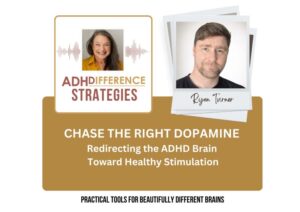 For Ryan Turner, motocross rider, recruiter, and founder of Dopamine Hunters, understanding ADHD meant understanding dopamine.
After his diagnosis, Ryan began reflecting on how his brain had always searched for stimulation. For years, that search had sometimes taken unhealthy forms — alcohol, substances, or constant restlessness. But when he returned to motocross, something shifted.
The adrenaline, the focus, the community, and the sense of challenge gave his brain exactly what it had been looking for all along — the right kind of dopamine.
” I think the misconception is that a lot of people think that all dopamine is good and it’s not…. Some of it’s really bad like alcohol abuse or drug abuse. ”
— Ryan Turner, ADHDifference
ADHD brains are wired to seek stimulation. The goal isn’t to suppress that drive, it’s to channel it toward environments that energise rather than harm.
Why It Works
ADHD is closely linked to differences in the brain’s dopamine system, which influences motivation, reward, and attention. When stimulation is low, the ADHD brain often feels restless, bored, or under-activated. That’s why many ADHDers naturally seek novelty, intensity, or excitement.
Sometimes that search leads to healthy outlets like sport, creativity, entrepreneurship, adventure. Other times, it can lead to less helpful coping strategies like substance use, impulsive spending, or constant distraction.
Instead of asking “How do I stop seeking stimulation?” the better question becomes: “Where can I find the right kind of stimulation?”
When dopamine comes from meaningful activities, it fuels focus, confidence, and emotional regulation.
When to Use It
This strategy is especially helpful when you notice yourself:
- feeling restless, bored, or mentally under-stimulated
- seeking quick dopamine hits (snacking, scrolling, shopping)
- struggling to stay engaged with low-interest tasks
- feeling drained despite being busy all day
- craving excitement or challenge
These moments are often signals that your brain needs more meaningful stimulation, not less.
How to Practice It
- Identify Your Healthy Highs
Think about activities that make you feel fully engaged and energised. These might include: sport or physical challenges, creative projects, building or fixing things, learning a new skill, competitive games, outdoor adventures etc.
Notice where your brain naturally finds focus. - Replace, Don’t Remove
If you notice unhelpful dopamine habits (excess scrolling, sugar, alcohol, impulsive shopping), try replacing them with higher-quality stimulation rather than simply removing them.
Your brain still needs the reward. - Build a Dopamine Menu
Create a list of healthy stimulation options you can turn to when your brain needs a boost. Examples might include: going for a fast walk, working on a hobby, listening to music while moving, tackling a challenge-based task or spending time with energising people.
Having options ready makes it easier to redirect your energy. - Find Your Community
Being around people who enjoy the same stimulation can create positive momentum, motivation, and belonging. - Accept the Need for Stimulation
ADHD brains often function best when life includes challenge, novelty, and excitement. Rather than judging that need, treat it as useful information about how your brain works.
The Science Behind It
Research shows that ADHD is closely linked to differences in the brain’s dopamine system, which plays a central role in motivation, reward processing, and attention.1 Neuroimaging studies have found reduced dopamine activity in key reward pathways of the ADHD brain, particularly in areas involved in motivation and reinforcement learning. This helps explain why tasks that are repetitive or low-interest can feel difficult to start or sustain, while stimulating activities can trigger strong engagement and focus.
Because of this dopamine regulation difference, people with ADHD are more likely to seek novelty, excitement, and immediate rewards. When stimulation is too low, the brain may look for faster dopamine boosts which can sometimes appear as impulsive behaviour or unhealthy coping strategies. Delayed rewards don’t “land” the same way, which helps justify the pull toward immediate high-stimulating rewards.2
Engaging activities such as physical exercise, challenge-based tasks, and novel experiences can increase dopamine availability and improve attention and mood. This helps explain why many ADHDers naturally gravitate toward high-energy environments like sport, creative work, entrepreneurship, or adventure — contexts that provide the stimulation their brains need to function at their best.
💬 Final Thought
Ryan’s story reminds us that ADHD isn’t about eliminating the need for dopamine. It’s about learning where to find it safely and meaningfully.
Your brain will always look for stimulation. That’s part of how it’s wired.
The real strategy is choosing environments, activities, and communities that give your brain the energy it needs without costing you your wellbeing. When you chase the right dopamine, the same drive that once felt chaotic can become one of your greatest strengths.
🎧 Listen to the full episode with Ryan Turner (S2E46) here 🎧
REFERENCES
- Volkow, N.D., Wang, G.J., Newcorn, J.H., et al. (2009). Evaluating Dopamine Reward Pathway in ADHD
- Tripp, G & Wickens, J.R. (2008). Research Review: Dopamine Transfer Deficit – A Neurobiological Theory of Altered Reinforcement Mechanisms in ADHD