
Out in the wild, movement becomes more than just exercise. It’s a reset, a way to regulate the nervous system, untangle thought loops, and release stuck emotions.
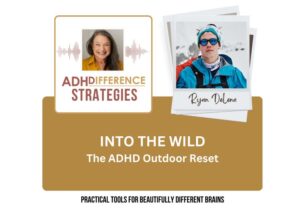 For Ryan DeLena, nature isn’t just a backdrop, it’s medicine. Whether hiking, skiing, or climbing, Ryan discovered that movement outdoors gave his ADHD brain something he struggled to find elsewhere: peace.
For ADHDers, whose minds often race or spiral, moving in nature offers grounding, flow, and clarity.
“You can experience something through movement… Sometimes I’ll go for a long walk in the mountains… and weird little things of sadness or anger come up… but by the end of the hike, whatever those things are, they’re not affecting me in the same way — or at all.”
— Ryan DeLena, ADHDifference
Why It Works
Outdoor movement taps into the unique wiring of ADHD brains. It offers:
- Somatic regulation – helping release stress stored in the body
- Flow state access – where time drops away and focus arrives naturally
- Cognitive clarity – allowing thoughts and emotions to process without force
- Sensory reset – nature offers the right kind of stimulation: grounding, not overwhelming
This isn’t about counting steps or chasing fitness. It’s about movement as mental restoration especially when it happens outdoors in nature.
When to Use It
Use this strategy when you notice rising overwhelm, racing thoughts, emotional flooding, or a sense of disconnection from your body or surroundings. While it’s a powerful circuit-breaker in moments of stress, it’s just as valuable as a daily tool.
Building intentional movement into your life, even outside of crisis, helps regulate your nervous system and create space for mental clarity. And when possible, adventurous movement like hiking, rock climbing, or skiing can take this even further, offering deep focus, flow, and a sense of agency that builds lasting resilience.
How to Practice It
Start simple. Movement doesn’t have to be extreme to be effective:
- Take a walk outside without your phone
- Hike a familiar track and let your thoughts roam
- Use nature as a space to feel rather than fix
- Try outdoor movement that requires focus: climbing, paddleboarding, trail running, or even gardening
Whenever possible, choose immersive environments, places where the sights, sounds, and textures of the natural world bring your nervous system back to neutral. These moments help your body lead, so your mind can follow.
For Ryan, these outdoor resets became more than coping tools, they became identity-shaping experiences. When the world felt too loud, the wild offered quiet. When nothing else worked, movement did.
The Science Behind It
Research increasingly shows that physical activity can positively impact the ADHD brain, especially in areas tied to attention, executive function, and emotional regulation:
- Studies suggest that exposure to green space is linked to fewer ADHD symptoms and improved attention in children diagnosed with ADHD relative to built or indoor environments.1
- Preliminary evidence suggests physical activity helps reduce anxiety, depression, and emotional dysregulation, issues often comorbid with ADHD, by promoting mood regulating neurotransmitters and stress related adaptations.2
- Research also shows that green time, regular time spent outdoors surrounded by vegetation, is associated with reduced ADHD symptom severity, lower stress, and better emotional wellbeing.3
- Broader reviews of nature exposure research conclude that children’s contact with nature improves mood and cognitive functioning while reducing ADHD‑like behaviours, supporting the therapeutic potential of outdoor time.4
Together, these studies support movement as more than “good for health”. It’s a neurological and emotional support tool that helps regulate ADHD related attention and mood systems.
💬 Final Thought
Ryan’s journey reminds us that sometimes the most powerful healing doesn’t happen in stillness, it happens in motion. When words aren’t enough and the noise is too loud, let your body take the first step. Whether you’re hiking a mountain or walking around the block, movement helps you come home to yourself.
🎧 Listen to the full episode with Ryan DeLena (S2E32) here 🎧
REFERENCES
- Jiang, Y. & Manoiu, R. (2021). Is Exposure to Nature Related to ADHD Symptoms?
- Faraone, S.V. (2025). Seven New Meta-analyses Suggest Wide Range of Benefits from Exercise for Persons with ADHD
- Sampson Hoffman, K. (2021). Green Time for ADHD
- Collado, S. & Staats, H. (2016). Contact with Nature and Children’s Restorative Experiences: An Eye to the Future