
Viewing your ADHD self as a kaleidoscope is more than just a metaphor, it’s a radical act of self-recognition.
| with guest Hilary Momberger Powers |
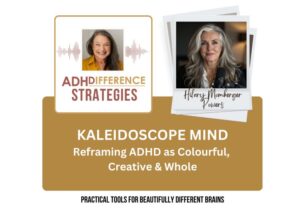 When late-diagnosed actor and ADHD advocate Hilary Momberger Powers began unpacking her ADHD diagnosis, she wasn’t just re-evaluating her past. She was rediscovering her sense of self.
“Today I’ve honed it down that I am so grateful I have it because I am just a kaleidoscope and I see things so differently than the average bear as we say, you know.”
— Hilary Momberger Powers, ADHDifference
The idea? ADHD doesn’t need fixing. It needs framing. And that frame can be dynamic, bright, and fully human.
Why It Works
When ADHD traits have been pathologised for decades, it’s easy to internalise the belief that there’s something inherently wrong with you. This mindset flips that narrative. By using imagery that celebrates complexity, transformation, and colour, individuals can begin to see themselves as dynamic not defective.
A metaphor like “kaleidoscope” helps the brain anchor a new, positive association with one’s neurodivergence. It gently dismantles shame, while honouring the emotional intensity, vivid focus, and creativity that often come with ADHD.
When to Use It
This mindset shift is especially powerful:
- After diagnosis: When you’re untangling decades of internalised stigma.
- In moments of shame: When you feel “too much” or “not enough.”
- During reflection: When revisiting past mistakes or misunderstood behaviour.
- When explaining your ADHD to others: To foster empathy and self-expression.
How to Practice It
- Visualise Your Pattern
Imagine your mind as a kaleidoscope … changing constantly, never broken, always capable of forming something beautiful. - Name the Shift
When things feel chaotic or out of sync, try: “This is just a turn of the lens. It’s not the end of the pattern.” - Inventory Your Traits
List your quirks, strengths, sensitivities, and passions not as flaws or deficits, but as ingredients in your unique design. Try framing differences as data, not judgement. - Share Your Metaphor
Don’t keep your colourful mind hidden. Share your kaleidoscope with pride whether through conversation, creativity, or self-expression. Let others see how your brain works, not to seek sympathy, but to stand fully and proudly in the unique human you are. Your perspective adds beauty to the world just as it is.
The Science Behind It
The kaleidoscope mindset (viewing ADHD as dynamic rather than broken) aligns with research on self-compassion and identity reframing. Adults with ADHD often have lower self-compassion, which is linked to increased emotional distress. Treating ourselves with kindness, especially after setbacks, helps reduce stress, reactivity, and the internal shame stories that keep us stuck.1
Self-compassion isn’t just feel-good, it’s functional. It supports emotional regulation, lowers the impact of negative thoughts, and is tied to post-traumatic growth — the ability to grow through adversity, not just survive it.2
Reframing identity from “I’m broken” to “I’m evolving” reflects findings in narrative identity research, showing that re-authoring our story boosts wellbeing and resilience particularly in neurodivergent and mental health contexts.3
💬 Final Thought
You are not broken, disordered, or chaotic. You are shifting patterns of light — turning, re-forming, refracting. Each movement may feel like disorder, but taken as a whole, it’s a masterpiece in motion.
Hilary’s kaleidoscope metaphor reminds us: ADHD isn’t a flaw to manage, it’s a lens to appreciate and celebrate. You don’t need to be fixed. You need to be seen.
🎧 Listen to the full episode with Hilary Momberger Powers (S2E31) here 🎧
REFERENCES
- Beaton, D.M., Sirois, F. & Milne, E. (2022). The role of self‐compassion in the mental health of adults with ADHD
- Munroe, M., Al-Refae, M., Chan, H.W., Ferrari, M. (2022). Using self-compassion to grow in the face of trauma: The role of positive reframing and problem-focused coping strategies
- Kerr, D.J.R., Deane, F.P. & Crowe, T.P. (2019). Narrative Identity Reconstruction as Adaptive Growth During Mental Health Recovery: A Narrative Coaching Boardgame Approach